
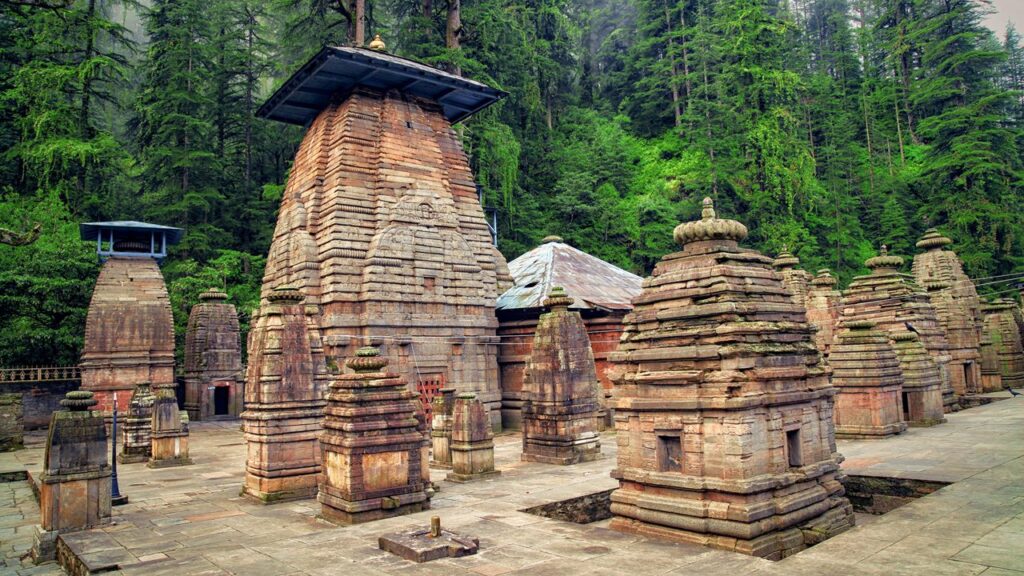
Nestled in the serene forests of the Kumaon Himalayas in Uttarakhand, Jageshwar Dham is one of the most ancient and spiritually significant temple complexes dedicated to Lord Shiva. Surrounded by dense deodar forests and located along the tranquil Jata Ganga river, this sacred pilgrimage site attracts thousands of devotees, spiritual seekers, historians, and travelers every year.
Often described as a mystical valley of temples, Jageshwar Dham is not only a religious destination but also a cultural and architectural treasure of the Himalayas. The temple complex is believed to be more than a thousand years old and reflects the rich spiritual heritage of the Kumaon region.
Location and Natural Beauty
Jageshwar Dham is located in the Almora district of Uttarakhand at an altitude of about 1,870 meters above sea level. The temple complex lies approximately 36 kilometers from the town of Almora and is surrounded by thick forests of cedar (deodar) trees, which create a peaceful and spiritual atmosphere.
The drive to Jageshwar is itself a memorable experience. The road winds through beautiful mountain villages, terraced farms, and lush forests of the Kumaon Himalayas. The cool climate, the sound of temple bells, and the flowing Jata Ganga stream make the place ideal for meditation and spiritual reflection.
Because of its serene surroundings and sacred aura, many pilgrims believe that Jageshwar is a place where one can experience deep spiritual peace and divine energy.
Ancient Temple Complex
Jageshwar Dham is famous for its large cluster of ancient stone temples. The complex contains more than 100 temples, with some estimates suggesting that about 108 temples currently survive, although historical records indicate that around 400 temples may have existed here in ancient times.
Most of the temples are dedicated to Lord Shiva and are built in the traditional North Indian Nagara style of architecture. The temples have tall stone towers called “shikharas,” and many feature intricate carvings and sculptures.
These temples were constructed between the 7th and 14th centuries during the reign of the Katyuri and Chand dynasties, who ruled the Kumaon region during that period.
Some of the most important temples within the complex include:
- Mahamrityunjaya Temple
- Jageshwar Mahadev Temple
- Kedarnath Temple
- Navagraha Temple
- Surya Temple
- Pushti Devi Temple
- Lakulish Temple
Among these, the Mahamrityunjaya Temple is believed to be the oldest and dates back to the 8th century.
Spiritual Significance
Jageshwar Dham holds immense religious significance for devotees of Lord Shiva. Many devotees believe that the temple complex represents one of the sacred Jyotirlinga sites of Shiva, although this belief is based more on local tradition than on the classical list of twelve Jyotirlingas.
The main deity worshipped here is Bal Jageshwar, a child form of Lord Shiva. According to local legends, Shiva once came to meditate in this valley. When villagers discovered him, he transformed himself into a child to calm the disturbance, which is why he is worshipped here as a child deity.
Another belief associated with the Mahamrityunjaya Temple is that prayers offered here help devotees overcome fear and difficulties in life. The temple is associated with the Mahamrityunjaya mantra, which symbolizes victory over death and spiritual transformation.
Architecture and Cultural Heritage
The architecture of Jageshwar temples reflects the artistic excellence of early medieval India. Each temple is constructed from locally available stone and designed with remarkable symmetry and craftsmanship.
Many temples display intricate carvings of Hindu gods, mythological figures, and decorative motifs. The temple complex has been protected by the Archaeological Survey of India due to its historical and cultural importance.
Historians and archaeologists often describe Jageshwar as an open-air museum of ancient Himalayan temple architecture, where each shrine tells a unique story through its design and sculptures.
Near the temple complex, visitors can also find an archaeological museum that displays ancient idols, sculptures, and artifacts recovered from the region.
Festivals and Religious Celebrations
Jageshwar Dham becomes especially vibrant during the Hindu month of Shravan (July–August), when the famous Shravan Mela or monsoon festival is celebrated. During this time, thousands of devotees visit the temple to offer prayers to Lord Shiva.
The festival includes traditional rituals, cultural programs, devotional music, and community gatherings. Pilgrims from across Uttarakhand and neighboring states come to participate in the celebrations.
The temple also sees large numbers of visitors during Maha Shivaratri, one of the most important festivals dedicated to Lord Shiva.
Tourism and Spiritual Retreat
In recent years, Jageshwar Dham has also gained popularity as a destination for spiritual tourism and meditation retreats. The peaceful Himalayan environment makes it an ideal location for yoga, meditation, and nature retreats.
Efforts are being made to develop the area as a spiritual wellness center, including yoga retreats and meditation facilities that aim to attract visitors from around the world.
Despite increasing tourism, the region still retains its calm and untouched charm, allowing visitors to experience the authentic spiritual atmosphere of the Himalayas.
How to Reach Jageshwar Dham
Reaching Jageshwar Dham is relatively easy through road travel.
By Air:
The nearest airport is Pantnagar Airport, about 125 km away.
By Train:
The nearest railway station is Kathgodam, which is well connected to Delhi and other major cities.
By Road:
Jageshwar is well connected by road to Almora, Haldwani, Nainital, and other towns in Uttarakhand. Taxis and buses are easily available from these locations.
Conclusion
Jageshwar Dham is much more than just a temple complex. It is a place where spirituality, history, architecture, and natural beauty come together in perfect harmony. Hidden in the tranquil forests of the Kumaon Himalayas, this sacred destination offers visitors a unique opportunity to connect with ancient traditions and experience the divine presence of Lord Shiva.
Whether you are a pilgrim seeking blessings, a traveler exploring the Himalayas, or a history enthusiast fascinated by ancient temples, Jageshwar Dham promises an unforgettable and deeply spiritual experience.