
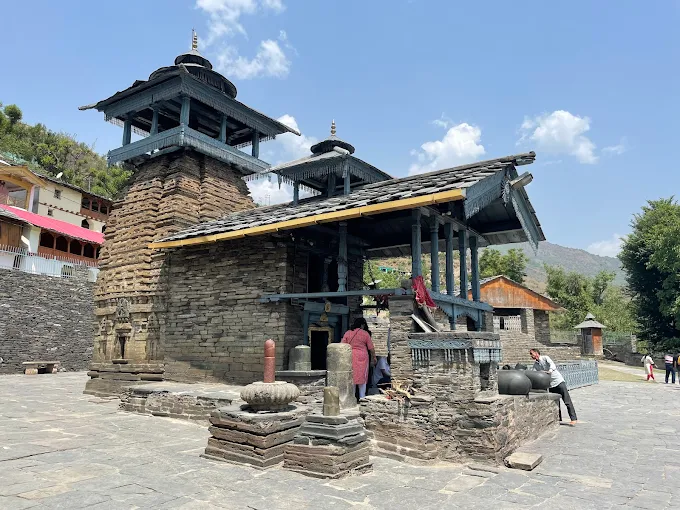
Lakhamandal Temple, nestled in the Jaunsar-Bawar region of Dehradun district in Uttarakhand, stands as one of the Himalayan foothills’ most enigmatic and historically significant religious sites. Dedicated to Lord Shiva, this ancient temple complex plays a vital role in the cultural, religious, and archaeological heritage of the region. Far more than a mere pilgrimage spot, Lakhamandal represents centuries of architectural evolution, mythological traditions, and human history deeply connected to the natural landscape of the region.
This article explores the history, legends, architecture, archaeological importance, sociocultural role, and evolving significance of Lakhamandal Temple, helping readers understand why this site continues to captivate scholars, devotees, and travelers alike.
Geographic Setting: The Landscape that Shapes a Sanctuary
Lakhamandal Temple is located in the Jaunsar-Bawar region, a culturally distinct area in the Chakrata tehsil of Dehradun district in Uttarakhand. The temple lies roughly 35 kilometers from Chakrata and about 128 kilometers from Dehradun city, along the Yamunotri-Mussoorie Road near the banks of the Yamuna River.
This strategic geographical location provided both natural protection and spiritual inspiration:
- The Himalayan foothills created a serene and secluded environment conducive to worship and meditation.
- The proximity to the Yamuna River added sacredness to the site, as rivers hold deep spiritual significance in Hindu tradition.
- The rugged terrain also helped preserve early structures longer than in more accessible plains regions.
Thus, Lakhamandal’s geography not only influenced its spiritual aura but also preserved the remnants of its ancient heritage for generations.
Origins and Etymology: Understanding the Name ‘Lakhamandal’
The name ‘Lakhamandal’ is derived from two Sanskrit words:
- Lakha (लाख) meaning “many”
- Mandala (मंडल) meaning “temples” or “circles”
Together, the term suggests a place of many temples or sacred shrines.
This etymology is supported by the extensive archaeological findings in the area. Excavations have uncovered numerous sculptures, architectural fragments, and vestiges of multiple shrines, suggesting that the site was once a large temple complex rather than a single monument.
Ancient Foundations: Archaeological Evidence and Early History
Although the present stone temple structure at Lakhamandal dates largely to the 12th–13th century CE, the site’s history stretches much further back.
Early Structural Activity (5th–8th Century CE)
Excavations conducted by the Archaeological Survey of India (ASI) have revealed structural remains predating the existing temple:
- Layers of brick foundations beneath the stone temple indicate earlier structures.
- Artistic and sculptural fragments from around the 5th–8th century CE suggest that Lakhamandal was a flourishing religious site in early medieval India.
Inscriptions Linking to Royal Patronage
A stone inscription from the 6th century CE records the construction of a Shiva temple at Lakhamandal by Princess Ishwara, a member of the royal house of Singhpura (Simhapura), for the spiritual welfare of her deceased husband, Chandragupta, the son of the king of Jalandhar. This inscription not only confirms early structural activity but also highlights royal patronage and historical continuity at the site.
This inscription provides valuable evidence of the temple’s ancient importance, placing Lakhamandal among the significant religious centers of the Central Himalayan region from early centuries CE.
Architectural Evolution: From Early Shrines to Nagara Masterpiece
Early Phase: Gupta and Post-Gupta Influences
The earliest phase of temple building at Lakhamandal emerged during the Gupta period (approximately 5th–6th century CE). Archaeological excavations uncovered:
- Flat-roofed temple remnants, unique for the Himalayan region.
- Sculptures and reliefs with stylistic features predating the main temple.
These early architectural remains indicate that Lakhamandal was an active sacred site long before the present structure was built.
The Main Temple: Nagara Style (12th–13th Century CE)
The surviving main structure at Lakhamandal belongs to the North Indian Nagara architectural tradition, typical of northern India in the 12th–13th century CE.
Key architectural features include:
- A pyramidal shikhara (spire) above the sanctum, characteristic of Nagara temples.
- Intricate stone carvings and sculptural panels on the exterior walls.
- A well-defined garbhagriha (sanctum) housing the Shiva lingam.
- Structural remnants of smaller shrines that once formed part of the temple complex.
The architectural evolution at Lakhamandal reflects a continuous sacred tradition, blending early and later South Asian temple styles.
The Graphite Shiva Lingam: A Unique Spiritual Symbol
One of Lakhamandal’s most remarkable features is its graphite Shiva lingam. This lingam is unlike most stone lingams found in Indian temples because:
- It is made of black granite or graphite, a material that reflects light and images when water is poured over it.
- Devotees believe that this reflective quality symbolizes divine presence and spiritual grace.
This unique lingam has become an iconic part of the temple’s identity and contributes to Lakhamandal’s mystical atmosphere.
Mythology and Cultural Legends: The Mahabharata Connection
Lakhamandal Temple is deeply embedded in Hindu mythological traditions, particularly the epic Mahabharata.
The Lakshagraha Legend
Local legend holds that Lakhamandal was the site of the infamous Lakshagraha (House of Lac) conspiratorial plot by Duryodhana to kill the Pandavas by burning them alive inside a palace made of wax.
According to this narrative:
- The Pandavas were housed here by the deceitful Kauravas.
- They escaped through a secret tunnel leading to a nearby cave known locally as Dhundhi Odaari, meaning “misty cave” in the Jaunsari language.
While the historical accuracy of this legend remains part of oral tradition, it has become an integral cultural narrative that enriches the temple’s symbolic significance.
Statues and Symbolism: Danav and Manav
At the entrance to the temple complex stand two carved stone statues, locally known as Danav (demon) and Manav (man). These figures serve as dwarpalas (gatekeepers).
Interpretations of these statues vary:
- Some locals believe the figures represent Pandava brothers Bhima and Arjuna.
- Others associate them with Jaya and Vijaya, the legendary gatekeepers of Lord Vishnu in Hindu mythology.
These statues contribute to the temple’s mythological ambiance and invite devotional contemplation on good, evil, and spiritual guardianship.
The Dhundhi Odaari Cave: A Mythic Refuge
A short distance from the temple lies a cave known locally as Dhundhi Odaari, believed to be the secret passage used by the Pandavas to escape the Lakshagraha plot.
The cave’s name, meaning “foggy or hidden cave,” reflects its mysterious aura and symbolic function in the local lore. Although its connection to the Mahabharata is part of traditional belief, the cave adds to the cultural fabric of the region and attracts visitors interested in both history and mythology.
Artistic Legacy: Sculptures and Archaeological Finds
The site around Lakhamandal Temple has yielded a rich collection of sculptural remains, revealing the artistic heritage of the Himalayan foothills.
Archaeological finds include:
- Sculptures of Shiva, Parvati, Kartikeya, Ganesha, and other deities.
- Early medieval panels and relief panels showing stylistic elements distinct to the region.
- Architectural fragments suggesting the existence of multiple temples in the area.
These artistic remains highlight Lakhamandal’s role as a center of sculpture and religious art across centuries.
Cultural Significance: Rituals, Beliefs, and Festivals
Lakhamandal Temple remains an active place of worship, drawing devotees especially during Mahashivratri and other Shiva-related festivals.
Local traditions hold that:
- Worship at Lakhamandal can remove misfortunes and bring spiritual peace.
- Rituals at the temple reflect deep devotional engagement with Shaivism, one of Hinduism’s major traditions.
The temple thus continues to be both a historical site and a living center of religious practice.
Preservation and Modern Development
Lakhamandal Temple is recognized as a site of national importance and is protected by the Archaeological Survey of India (ASI).
In recent years:
- The Uttarakhand Tourism Development Board and local communities have invested in renovation and visitor infrastructure.
- The site has been handed over to local gram panchayats to help generate sustainable livelihoods through heritage tourism.
Despite these efforts, experts note that continued preservation work and scholarly excavation are needed to fully understand and safeguard the temple’s historical treasures.
Visitor Experience: Pilgrimage Meets Heritage Tourism
Today, Lakhamandal is visited by:
- Pilgrims seeking spiritual fulfillment and blessings from Lord Shiva.
- History enthusiasts exploring ancient art and architecture.
- Tourists attracted by its scenic beauty near the Yamuna River and the foothills.
The reflective Shiva lingam, the misty cave, twin gatekeepers, and scattered temple ruins together create an immersive experience where myth, history, and environment converge.
Conclusion: Lakhamandal’s Enduring Legacy
Lakhamandal Temple stands as a multilayered heritage site, where archaeological history, mythological imagination, architectural ingenuity, and sociocultural traditions intersect. From early Gupta period beginnings and royal patronage by Princess Ishwara to later medieval temple construction and modern preservation efforts, Lakhamandal encapsulates the dynamic spiritual and historical legacy of Uttarakhand.
For devotees, the temple remains a place of divine connection. For historians and archaeologists, it offers invaluable insights into Himalayan temple architecture and sacred landscapes. And for visitors, Lakhamandal exemplifies how ancient places continue to live in the heart of modern India.